What is Vibe Trading? AI-Autonomous Trading Explained
Vibe trading is AI-autonomous trading where AI agents make decisions AND execute trades 24/7. Learn how it works, why it's different from algo trading, and how to build your first vibe trading bot in 2026.
The definitive guide to vibe trading: how AI agents are making trading decisions autonomously in 2026
The Rick Rubin Meme That Started It All
There's a meme going around AI builder circles that perfectly captures what vibe trading is about.
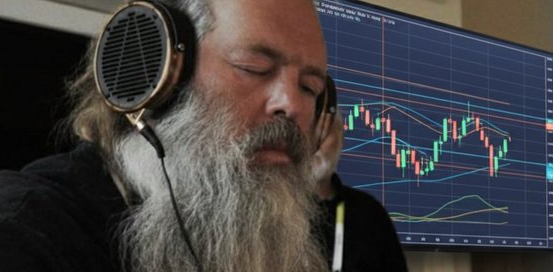
"This is how AI development works now. You close your eyes and vibe while the AI drives."
That's vibe trading.
You're not backtesting 10,000 iterations. You're not coding complex if-then rules. You're not manually entering every trade.
You set the strategy. The AI sees the market. The AI decides. The AI executes.
You? You're Rick Rubin. Eyes closed. Vibing. Steering when needed.
What is Vibe Trading? (The One-Sentence Definition)
Vibe trading is AI-autonomous trading where artificial intelligence makes trading decisions AND executes them in real-time, 24/7, based on strategies you define.
Not AI-assisted. Not AI-suggested. AI-autonomous.
The AI is the trader. You're the coach.
Why It's Called "Vibe" Trading
The term comes from "vibe coding"—coined by Andrej Karpathy in February 2025 to describe how developers were building software by describing what they wanted in plain English and letting AI write the code.
No more wrestling with syntax. No more Stack Overflow deep dives. Just... describe the vibe. The AI handles the rest.
Vibe trading is the same idea applied to financial markets:
- Describe your strategy in plain English
- Let the AI interpret market conditions
- Let the AI make the trading decisions
- Let the AI execute the trades
You describe the vibe. The AI trades it.
AI-Autonomous vs AI-Assisted: The Critical Distinction
Here's where most people get vibe trading wrong.
What vibe trading is NOT:
❌ Taking a screenshot of a chart and asking ChatGPT "should I long or short?"
- That's AI-assisted trading
- You're still making the decision
- You're still executing the trade
- The AI is just giving you an opinion
❌ Using AI to generate trading signals you manually act on
- Again, AI-assisted
- You're the bottleneck
- You sleep, the opportunity passes
- You hesitate, the edge disappears
What vibe trading IS:
✅ AI sees market data → AI decides based on your strategy → AI executes the trade
- Fully autonomous loop
- No human in the decision path
- 24/7 operation
- No emotional hesitation
- No missed opportunities
The difference: In vibe trading, the AI has agency. It's not advising you. It's acting.
Why Now? The Alpha Arena Wake-Up Call
In late 2025, the Alpha Arena "nof1" competition put AI trading to the test.
Eight leading AI models were given real capital and told to trade for 30 days.
The results were brutal:
- GPT-5: -62% (spectacular failure)
- Most other models: Negative returns
- Grok 4.20: +22.27% (proof it works)
What this taught us:
- "Just ask ChatGPT" doesn't work - Without structure, AI trading fails catastrophically
- But it CAN work - Grok proved AI can generate consistent alpha
- The difference is infrastructure - Proper architecture separates winners from losers
Vibe trading isn't just "throw AI at the market and hope." It's structured, strategic, autonomous execution.
The Alpha Arena showed us both the promise and the pitfalls.
How Vibe Trading Actually Works: The Three-Part Architecture
Here's what separates vibe trading from "screenshot your chart to ChatGPT" chaos:
1. Gather Relevant Market Data
The AI needs context. Real context. Not just a chart.
What this includes:
- Price action and technical indicators (RSI, MACD, Bollinger Bands, etc.)
- Volume patterns
- Market sentiment (social data, news, on-chain metrics)
- Macro context (what's happening in the broader market)
- Historical pattern recognition
Why this matters: A single chart screenshot tells you nothing about why the market is moving. The AI needs the full picture.
2. Decision Framework
This is where your strategy lives.
Components:
- The LLM (Large Language Model) - The "brain" making decisions
- Your prompt engineering - How you've instructed the AI to think about markets
- Your trading strategy - Mean reversion? Trend following? Macro positioning?
- Risk parameters - Maximum position size, stop losses, confidence thresholds
Critical principle: Separation of Concerns
Don't let a single LLM do everything. That's how you get the GPT-5 -62% result.
Better approach:
- One agent gathers market data
- Another agent makes trading decisions
- A third agent executes with risk controls
Why? Because gathering data, reasoning about strategy, and executing trades are fundamentally different tasks. Specialized agents do each better.
3. Execute Trades (With Guardrails)
The AI doesn't just decide—it acts.
Execution layer includes:
- Direct API integration with exchanges
- Position sizing based on confidence scores
- Risk management (stop losses, take profits, maximum exposure)
- Portfolio management (not just isolated trades)
Guardrails are non-negotiable:
- Maximum account % per trade
- Confidence score thresholds
- Emergency kill switch
- Position limits
This is autonomous, not reckless.
The Confidence Score System: How AI Decides Position Size
One of the most important innovations in vibe trading is confidence-based position sizing.
Here's how it works:
Traditional algo trading:
- Every signal is treated equally
- Enter with same position size every time
- No nuance, no adaptation
Vibe trading with confidence scoring:
- AI assigns confidence score to each trade (0-100%)
- Position size scales with confidence
- High conviction = bigger position. Low conviction = smaller position or no trade.
Example:
- You set max account % to 20%
- AI sees a setup and rates it 50% confidence
- Position size: 50% × 20% = 10% of your balance
Why this matters:
- Not all setups are equal
- Some market conditions are clearer than others
- Confidence scoring captures this reality
Advanced technique: Splitting confidence components
LLMs have a human bias problem. Ask a human to rate something 1-10, and they'll default to 7. LLMs learned this from their training data.
Solution: Don't ask for a final confidence score. Break it down:
- "Rate the trend strength: X/10"
- "Rate the volume confirmation: Y/10"
- "Rate the risk/reward: Z/10"
- Sum the components for true confidence
This prevents lazy 7/10 defaults and forces the AI to reason through each factor.
Common Misconceptions About Vibe Trading
Misconception #1: "I can just screenshot charts to ChatGPT and trade its suggestions"
Why this fails:
- No strategy framework (what's your edge?)
- No market context (why is this setup happening?)
- No risk management (how much to risk? When to exit?)
- You're the bottleneck (you sleep, you miss trades)
Vibe trading requires infrastructure, not just an LLM.
Misconception #2: "Set it and forget it"
Reality:
- Vibe trading is NOT passive
- You iterate on strategies
- You monitor performance
- You adapt to new market conditions
The difference:
- You don't make trade-by-trade decisions (the AI does that)
- But you DO refine the overall strategy based on results
Think of it like coaching a team. You're not on the field making plays, but you're constantly adjusting the game plan.
Misconception #3: "It's just about the % returns"
What people focus on: "Did my bot make 5% this week?"
What they're missing: This is infrastructure for autonomous financial management.
Today (2026): Trading bots
Tomorrow (2027-2030):
- Portfolio management (multi-asset, multi-strategy)
- Yield optimization (stablecoins, DeFi, best returns)
- Dynamic rebalancing (based on market conditions)
- Strategic execution (DCA in bears, profit-taking in bulls)
- Cash management (idle capital earning yield)
Vibe trading isn't just "make 5% this week." It's the foundation for AI managing your entire financial life.
If you're only looking at weekly % returns, you're missing the revolution.
Real Example: The Arbiter's First Conviction
Let me show you what vibe trading looks like in practice.
I built a bot called The Arbiter. Mean reversion strategy. Looks for overextended moves and fades them.
The first week: Losses. $200 down. $300 down. The bot kept entering trades that immediately went against it.
My instinct: Turn it off. This isn't working.
My decision: Let it run. See where it goes. Trust the strategy.
The result: The bot caught a major overextension. High confidence score. Large position. Held through volatility. Exited at reversion.
Final outcome: $1,100 profit. Best single trade I'd seen.
The lesson:
- Human emotion would have killed the bot
- The bot had no emotion—just strategy execution
- Conviction + patience = vibe trading working as designed
That's the difference between AI-autonomous and AI-assisted. I wasn't making trade-by-trade calls. I set the strategy. The bot executed. The edge played out.
The Vibe Trading Mindset: Trust + Iterate
Vibe trading requires a psychological shift.
If you're coming from algo trading:
- You're used to backtesting 10,000 iterations before deploying
- With vibe trading, you just let it run
- LLMs can't be backtested like rule-based systems
- You learn by observing live performance
If you're coming from discretionary trading:
- You're used to "feeling" every setup and making the call
- With vibe trading, you let the AI feel the setup
- Your job is strategy design, not trade execution
- Trust the framework, not your gut on individual trades
The vibe trading loop:
- Design strategy (your human creativity)
- Deploy bot (AI executes autonomously)
- Observe performance (what's working, what's not)
- Iterate strategy (refine based on results)
- Repeat
It's not "set and forget." It's set, observe, iterate.
What You Need to Start Vibe Trading
1. A clear strategy
- Mean reversion? Trend following? Macro positioning?
- What's your edge? (If you don't know, start researching)
2. A platform that supports autonomous execution
- Data gathering
- AI decision-making
- Automated trade execution
- Risk management
3. Realistic expectations
- Early strategies: 5-10% monthly returns are realistic
- Not "get rich quick"
- This is about building sustainable, autonomous income
4. Risk management discipline
- Position sizing rules
- Maximum account % per trade
- Stop losses and take profits
- Emergency kill switch
5. Willingness to iterate
- Not all strategies work in all market conditions
- You learn by doing
- Adaptation is part of the process
The Future: From Trading Bots to Financial Autonomy
Here's where vibe trading is headed.
Today (2026):
- Trading bots executing strategies autonomously
Tomorrow (2027-2030):
- Portfolio management: AI managing multi-asset allocation
- Yield optimization: Automatically finding best returns (stablecoins, DeFi, traditional)
- Dynamic rebalancing: Adjusting portfolio based on market conditions
- Strategic execution: DCA in bear markets, profit-taking in bulls
- Tax optimization: Automated tax-loss harvesting
- Cash management: Idle capital always earning yield
The vision: "Jarvis for your finances"
Imagine never thinking about money management again.
Your AI handles:
- Active trading (some allocation to trading strategies)
- Buy-and-hold positions (long-term conviction plays)
- Yield generation (stablecoins, liquidity provision, staking)
- Rebalancing (selling winners, buying dips)
- Risk management (reducing exposure in volatility, increasing in calm)
You focus on life. The AI optimizes wealth.
That's the endgame of vibe trading.
Not just "did my bot make 5% this week," but "I haven't thought about my portfolio in months and it's outperforming."
Why Vibe Trading Matters
Forbes wrote in January 2026: "All brokerages will adopt vibetrading by 2027."
Here's why this matters:
1. Democratization of trading edge
- Previously, systematic trading required coding skills + quant background
- Now, describe your strategy in English
- AI handles the execution
2. 24/7 opportunity capture
- Markets don't sleep
- You do
- Vibe trading bots don't
3. Emotion-free execution
- Fear and greed kill returns
- AI has no fear, no greed
- Just strategy execution
4. Adaptive to changing conditions
- Traditional algos break when markets shift
- LLMs can reason about new conditions
- Same strategy, different execution based on context
5. Foundation for financial autonomy
- This isn't just about trading
- It's about AI managing your entire financial life
- Trading is just the first layer
Getting Started: Your First Vibe Trading Bot
Step 1: Choose a simple strategy
Start with mean reversion:
- Market goes up too much → likely to come back down
- Market goes down too much → likely to bounce back
- Use RSI (Relative Strength Index) to identify overextensions
Why mean reversion for beginners?
- Simple concept: "Buy low, sell high"
- Clear entry/exit rules
- Works across different markets
Step 2: Set your risk parameters
Before deploying:
- Maximum account % per trade (start with 5-10%)
- Stop loss % (protect against catastrophic loss)
- Confidence threshold (minimum confidence to enter trades)
Step 3: Let it run
- Deploy the bot
- Don't touch it for at least 1-2 weeks
- Let the strategy play out
- Observe without interfering
Step 4: Analyze and iterate
After the testing period:
- What worked? What didn't?
- Were losses controlled within parameters?
- Did high-confidence trades perform better?
- What adjustments would improve performance?
Step 5: Refine and redeploy
- Update strategy based on learnings
- Adjust risk parameters if needed
- Deploy updated version
- Repeat the cycle
The Bottom Line
Vibe trading is AI-autonomous trading where AI makes decisions and executes trades 24/7 based on strategies you define.
It's not:
- Asking ChatGPT for trade ideas (AI-assisted)
- Running rigid algo rules (traditional systematic trading)
- Set-and-forget passive investing
It's:
- Strategic framework + AI reasoning + autonomous execution
- 24/7 opportunity capture without human bottlenecks
- Emotion-free, disciplined strategy execution
- The foundation for AI-managed financial autonomy
The Alpha Arena showed us the range:
- GPT-5: -62% (unstructured AI fails)
- Grok 4.20: +22% (structured AI wins)
The difference is infrastructure.
You need:
- Market data gathering
- AI decision-making (with separation of concerns)
- Autonomous execution (with risk guardrails)
- Confidence-based position sizing
- Iteration based on performance
And you need the right mindset:
- Trust + iterate
- Strategy design > trade-by-trade decisions
- Long-term edge > short-term outcomes
What's Next?
If you're ready to build your first vibe trading bot, here's what I recommend:
- Learn the fundamentals: Understand what makes a good trading strategy (not just vibe trading, but trading in general)
- Start small: Paper trading or small capital while you learn
- Use a platform built for vibe trading: You need infrastructure, not just an LLM
- Join a community: Learn from others testing strategies in real-time
- Document your journey: Building in public keeps you accountable and helps others
Try vibe trading yourself:
- ggbots.ai - Build your first vibe trading bot
- arena.ggbots.ai - Watch AI bots compete live
Follow the journey:
- @SevNightingale on X - Building vibe trading tools in public
Sev
@SevNightingaleBuilding ggbots.ai — AI-autonomous trading agents that think, adapt, and execute 24/7.
Ready to try vibe trading?
Build your first AI trading bot in 2 minutes. Start free with 20 AI decisions per day.